|
Biaxially Oriented PP film consumption in 2001 reached almost 3.2
million tonnes, from a modest level of merely 500KT in 1985. It
has continued to grow at an average rate of over 12% in the last
16 years. Infact it has outbeaten both cellophane and PET in the
last two decades.
Cellophane has almost been made redundant. PET
film, although having better rigidity and clarity, has not been
able to keep pace with BOPP on account of cost benefits offered
by BOPP. Several market research studies indicate that BOPP market
could reach about 4 million tonnes by 2003-2004 and 6 million tonnes
by 2010. BOPP therefore will continue to outperform growth of PP.
The demand of BOPP has been much higher in the
Asian regions, over the last few years. Infact Asia accounts for
almost 33% of the total consumption of 3.5 million tonnes in 2001.
China has become a great force in BOPP and is expected to soon become
a global leader on account of a more than 9% average growth rate
that is expected in the coming decade. It is expected that China
will account for more than 1 million tonne out of 6 million tonnes
consumption of BOPP by 2010. North America and West Europe, with
almost 42-43% share of global market in 2001 are not likely to grow
beyond 5%.
The present world scale BOPP film plant has a reached
a capacity of more than 25kt. Infact a few new lines have been designed
to produce 32kt of BOPP films from a single line. Nan Ya Plastic,
with more than 100kt BOPP capacity on 6 lines is expected to commission
2 new lines having individual capacity of 32kt by 2003. BOPP film
capacities of stenter lines have grown dramatically in the nineties.
There are more than 160 producers of BOPP in the
world. Market research companies like AMI for e.g., estimates about
200 producers. However the top 10 producers account for almost 40%
of the total capacity. Infact there are about 6 producers that have
capacity beyond 100kt. ExxonMobil, with about 260kt capacity is
the largest BOPP film producer. Vitan from Italy has become the
second largest BOPP film producer. Asian manufacturers are aggressively
building up newer capacities and are expected to soon emerge as
large producers of BOPP film. Infact Foshan Plastics group has become
a significant player in China.
Co extruded films have the largest share of BOPP
film market. The skin layers responsible for heat sealing at lower
temperatures are becoming essential to meet the requirements of
high speed packaging. The metallization to enhance barrier properties
has reached a level beyond 10% of the total BOPP films. Synthetic
paper and other applications are responsible for a significant role
of opaque films. Infact these types of films are drivers of BOPP
market. No wonder the share of plain films is reducing to a level
below 20%.
The continued growth of BOPP, despite a 20-25%
reduction in thickness over the last decade, clearly indicates that
BOPP film has become a leading player of flexible packaging.
|
|
|
BOPP film capacity in India |
| Company |
Capacity (KT - 2001) |
| Cosmo |
37.5 |
| Flex Ind |
15 |
| Max |
9 |
| Xpro (Biax) |
5 |
| Supreme Industry |
2.5 |
| Hindustan Adhesive |
2.4 |
| Kabra |
2 |
| MPUP |
0.8 |
| Total |
74.2 |
|
Future Capacity plans for BOPP capacity (KT) |
| Cosmo |
10 |
| Flex Industry |
12 |
| Jindal Group |
25 |
| Nova Petrochem |
25 |
| New Capacities |
72 |
|
Previous Article
Next Article
Tell Us What You Want
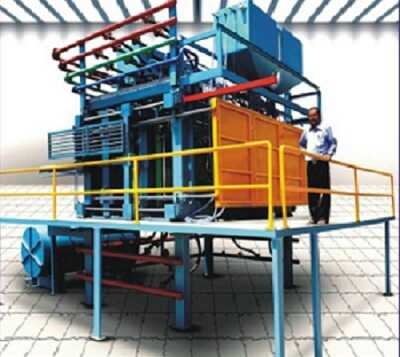
EPS block moulding, thermocole plant
| | | |