|
Polyolefins have several key applications in various
sectors such as packaging, automotive, household products, electronic
appliances, etc which constitute a significant part of the common
economy. They are therefore governed by the general economic parameters.
The global economy in 2001 was severely affected by a slowdown in
USA, the world's largest economy. Polyolefins interestingly have
withstood the dismal economic conditions mainly due to good growth
in Asia, with Europe contributing in the overall growth by nullifying
the negative growth recorded in North America to a great extent.
Several global Polyolefins reports from various well renown consulting
organisations have brought about the Polyolefins consumption in
2001 as:
| |
Miot
|
%
|
| LDPE |
16
- 17
|
19
- 20
|
| LLDPE |
13
- 14
|
16
- 17
|
| Total
LD/LLDPE |
31
|
37
|
| HDPE |
23
|
27
|
| Total
PE |
54
|
64
|
| PP |
30
- 31
|
36
|
| Total
Polyolefins |
84
|
100
|
Polyolefins at 84 million tonnes have a 63% share
of the commonly used plastics that include PVC, Styrenics and PET
containers.
Polyethylenes at 54 million tonnes have a 40% share of the commonly
used plastics.
PP has a 23% share.
Small wonder that Polyolefins have a significant
impact on the plastics. 2001 was indeed a very difficult year for
Polyolefins and plastics. North America, the largest consumer of
plastics affected the overall growth siginificantly in 2001. Despite
this, Polyolefins have beaten the global GDP growth in 2001.
LLDPE and PP have continued to show very healthy growth in the last
5 years. LLDPE possibly has been growing at the expense of LDPE.
Infact LDPE is either shrinking or stagnating at the level of 16-17
million tonnes in the last few years. Even the stronghold of European
market is slowly yielding to LLDPE. The Asian as well North American
markets now have much higher share of LLDPE compared to LDPE.
Interestingly HDPE has continued to show good
growth mainly due to blow moulding, pipes and film applications.
Infact most
of the consultants forecast HDPE to grow at 6% for the next five
years. PP, of course
due to its wider utilization and ability to replace other materials
quite effectively, is expected to show at least 6% growth in the
next five years. These Polyolefins are likely to grow to 110 million
tonnes from the level of 84 million tonnes indicating an average
growth of 5.5% until 2006.
 |
|
|
MiOT |
AAGR % |
|
|
2001 |
2006 |
|
|
LDPE
|
17 |
18 |
1 |
|
LLDPE
|
14 |
21 |
8 |
|
Total LD/LLDPE
|
31 |
39 |
4.5 |
|
HDPE
|
23 |
31 |
6 |
|
Total PE
|
54 |
70 |
5 |
|
PP
|
30 |
40 |
6 |
|
Total Polyolefins
|
84 |
110 |
5.5 |
All Polyolefins have larger production
capacities compared to their demand. PE capacity in 2001 was 66
million tonnes while PP capacity was 38 million tonnes. The overall
capacity of Polyolefins was 104 million tonnes against the consumption
of 84 million tonnes indicating capacity utilization of just about
80-81%. The capacity is expected to be increased by 23 million tonnes
in the period between 2001 and 2006. The capacity breakdown given
below brings about some interesting points.
|
|
Capacity MiOT
|
Demand MiOT
|
Increase MiOT
|
|
Product
|
2001
|
2006
|
2001
|
2006
|
Capacity
|
Demand
|
|
PE
|
66
|
82
|
54
|
70
|
16
|
16
|
|
PP
|
38
|
45
|
30
|
40
|
7
|
10
|
The expected increase in PE capacity is almost in line with the expected
increase in demand. On the other hand the capacity build up in PP
is lower than the expected increase in demand.
Previous Article
Next Article
Tell Us What You Want
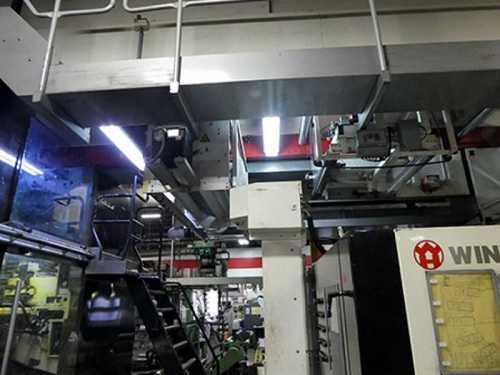
W&H Novovflex gearless CI flexo printing press
| | | |