|
Robert Banks and John Paul Hogan aren't exactly household names,
but just try to get through the day without them.
Their presence is in the baby bottles you heat
on the stove, the pipes tucked under your kitchen sink, the indoor-
outdoor carpeting you laid in the basement. They ate with you as
you poured your breakfast milk from a jug, played with you as you
twirled a Hula-Hoop, and worked beside you as you pulled out tools
to tackle a repair. And as you drove to school to pick up the kids,
they went along for the ride: under the hood, in the trunk, on the
roof.
No, Banks and Hogan didn't invent all of those
things. They invented what made all of those things possible: high
density polyethylene and polypropylene, the basis of today's plastics
industry.
While their discovery back in 1951 was completely
unexpected, don't call it an accident. Hogan, a deeply spiritual
man, will tell you it's all part of a greater plan. "I came
to regard research as discovering God's secrets and learning to
think God's thoughts as he revealed them in sometimes surprising
ways," he said.
Hogan, 82, was born in Lowes, Ky. Banks, who died
in 1989, was a native of Piedmont. Both were chemists for Phillips
Petroleum Co. on that fateful day in June 1951. What they had set
out to do was convert natural gas byproducts into gasoline additives.
It had been obvious for some time that the family car - traveling
faster and farther than ever before - was in need of a high-octane
gas that was affordable.
Hogan and Banks watched as an experiment in a flask
turned into a white, taffylike substance. "We knew we had a
unique discovery on our hands," Hogan would say years later.
An understatement, to be sure. While most plastics of that period
were either brittle or too easily softened by heat, the process
they refined produced a material that was strong, heat-resistant
and cheap.
As a result of their work, Phillips plunged headlong
into the plastics industry, investing $50 million in a plant near
Houston and marketing a material it branded "Marlex."
But some early production problems made manufacturers question whether
Phillips really had such a miracle plastic. Most of the Marlex plastic
pellets sat in warehouses for years until relief came from an unlikely
source.
The Hula-Hoop craze swept America when it hit the
stores in 1956 and, all of a sudden, toy manufactures couldn't keep
up. As huge orders for their plastic came in, Phillips not only
emptied its Marlex warehouses but geared the plant's entire output
toward making more. By the time Hula-Hoop fever leveled off in 1959,
the production problems had been solved and salesmen had lined up
new markets.
Phillips also had to fight some legal battles over
patents. But in 1982, the Supreme Court ruled in favor of Phillips,
and Banks and Hogan gained official recognition for their discovery.
Today, billions of pounds of polyethylene and polypropylene are
used annually to make packaging and containers, tools, furniture,
auto parts, tubing, carpet, pipes and many other products.
Hogan continued to be a chemist for Phillips until his retirement
in 1985, and while his greatest discovery came early in his career,
he said he never lost his zest for learning.
He was often motivated by a quote he kept in his office: "It's
what you learn after you think you know it all that counts."
Previous Article
Next Article
Tell Us What You Want
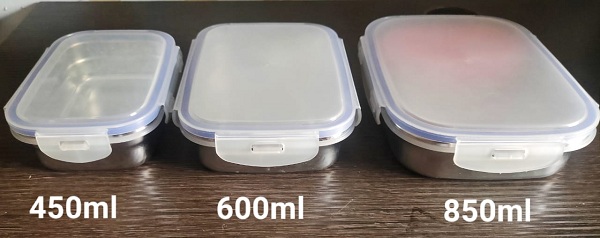
Unused tiffin, lunch box moulds
| | | |