|
Wood and plastics are being increasingly combined to make wood
fibre composite profiles for a variety of construction applications
such as decking, fencing and door/window frames. The trend has already
started in the U.S. where the market for wood extrusion has leapt
from 90,000 tons in 1998 to 1,80,000 tons in 2000 and extruded wood
profiles are now becoming more popular in Europe and Asia. The problem
of disposing large volumes of waste stream of wood flour (some wood
processing units generate as much as 50 tonnes of waste per day)
is being solved by it's use as primary material. The content of
wood is more than plastic in the wood fibre composites, where plastic
act as a glue. The material not only looks and feels like wood,
but it can be drilled, cut and trimmed with similar tools used for
wood. It can also be given an aesthetic finish by varnishing and
can also be sanded, painted, and stained. Besides being more cost-effective
then timber, which is expensive and prone to price fluctuations,
it does not absorb water or decay, like timber does. Most of the
production is done using the US developed Strandex system which
can handle wood contents of upto 70%. The wood is first pre-dryed
to reduce its moisture content below 2% and the wood scrap is then
blended with PP or powdered PP. The mixture is then fed into a conical
twin-screw extruder via a stuffing unit. Cincinnati Extrusion has
developed its Titan conical twin-screw extruder for handling wood
fibre, which has a wide, open feed area that gives the advantage
of handling highly-filled materials in the form of either powders
or pellets.
The company is also in the process of offering complete lines for
extruding profiles with wood content of upto 85% which uses individual
dosing feeders to deliver wood and polymer pellets separately into
the extruders. For profiles with high wood loadings, there is no
need for calibration baths, and cooling is carried out using air
blowers, with little or no haul-off force required. Davis-Standard's
Woodtruder, is a dual-extrusion system combining wood fibre processing
and plastics extrusion in one machine. The machine features a primary
28:1 parallel twin-screw extruder and a moulded single-screw, side-injection
extruder. A crammer feeder conveys the wood fibre composite at a
controlled rate into the primary extruder. The first section of
this unit uses a special heating and vaccum venting system to eliminate
moisture from the wood fibre. Mounted mid-way along the primary
extruder, the side-injection extruder separately heats and mixes
the polymer. This is injected at a controlled rate to give the required
fibre-polymer ratio, which can be as high as 80% wood for interior
applications or 50-60% for outdoor uses. The machine can be used
with HDPE, PP, PS, PVC, or ABC along with a variety of fibrous materials
such as peanut shells, rice husks, wood shavings and jute. The production
of wood fibre composites has been made easier with the availability
of Fasalex pelletized compounds that can be simply fed into an extruder
by gravimetris or volumetric dosing. The pellets typically consists
of 60% saw dust or wood flour; 20% maize or corn and 20 % polymer;
which can be a biodegradable resin - to produce a fully natural
product.
| (Source:
Asian Plastics News, October 2000) |
Previous Article
Next Article
Tell Us What You Want
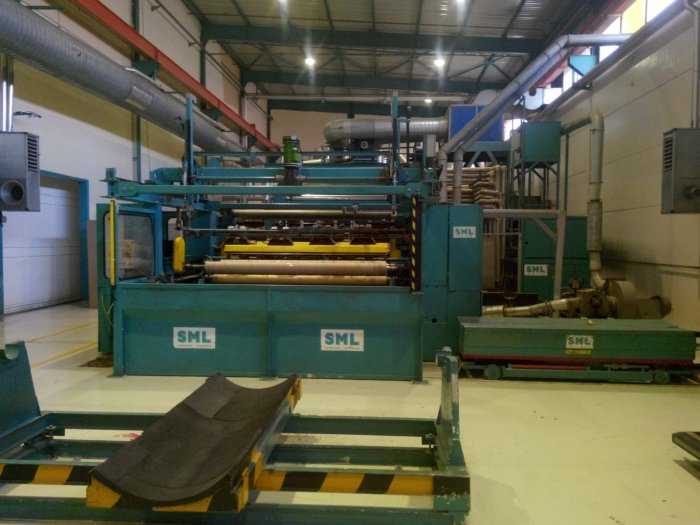
SML Lenzing Cast Film Line
| | | |