|
2003 is almost nearing its end. Figures
for the first three quarters of 2003 indicate that all commodity
plastics in North America are likely to end up at lower levels as
compared to 2002. Several factors contribute to this. However, the
key reasons for this poor performance are essentially :
 High feedstock prices: High feedstock prices:
 High feedstock prices: High feedstock prices:
causing polymer prices to be high
and thus leading to lower demand. Unforeseen events negatively affected
the petrochemical industry by the end of 2000. Energy prices surged
and have since remained higher than normal, increasing the cost
of making ethylene and propylene. 2003 saw naphtha prices move up
as the uncertainity of war on Iraq made oil prices spike and demand
from China slow down due to the SARS scare. An economic slowdown
demolished profit margins and affected the competitiveness of the
North American petrochemical industry.
An increase in imports of cheaper plastic conversion products
from Asia negatively affects demand for
domestic goods, aggravating the situation for the North American
resin producer. Easily transportable commodities; the lower-price
bags entering US from Asia now equate to almost 1.5 billion pounds
of resin use.
Higher morgage rates have lead to a slowdown in building and construction activity
another major reason for decline in PVC consumption. More than 50% of PVC output finds
its way into the construction market. From early 2001 to December
2002, spending on new construction fell by almost 40%. Industrial
construction has been in bad shape because of the long recession
in manufacturing. Real spending in this sector has collapsed by
69.2% since 1999.
PVC at 7% lower consumption is expected to show the worst performance,
while PP is likely to show 2-3% decline compared to 2002. Only PET
seems to be still growing although at about 6% compared to 7-8%
in the earlier years. ABS is not likely to perform well because
of shift in moulding activity to Asia with decent demand pick up
in food service products. Engineering polymers like PC and Polyamides
are expected to sustain modest growth, due to continued demand of
optical discs and stable demand from the automotive sector:
Most of the industry's experts believe that 2004 could be better.
Their optimism emanates from some of the following trends:
 |
 |
No newer capacities are being commissioned immediately, infact
some consolidation due to idling the uneconomic capacities may help
in improving the operative rates. |
|
|
Dow has tightened supply by idling almost 900 million pounds of
capacity in the region. |
|
|
Basell has 900 million pounds of idled capacity in Bayport, Texas,
and Lake Charles. |
|
|
2 former Borden Chemicals and Plastics plants that remain idled
in Geismar and Addis, La. |
However, the revival expected in 2003 is not happening.
Out of the last 4 years, almost 3 years have been weaker. Only patches
of 2000 & 2002 have been saving factors. Will this be an end
of slack period or will it revive? Only time will tell us.
Previous Article
Next Article
Tell Us What You Want
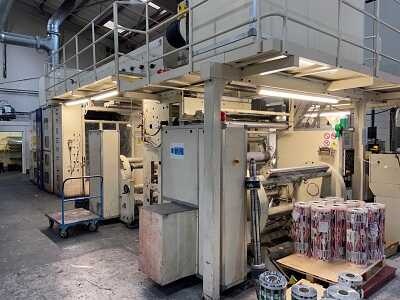
Carint Cyberflex 8 colour gearless CI flexo printing press
| | | |