|
Singapore, the island state with 4 million people,
inspite of being a small consumer of petrochemical products, is
home to very large petrochemical complexes set up by multinationals.
Last year ExxonMoibl set up a 800KT Ethylene cracker with downstream
Polyethylene and Polypropylene plants on Jurong Island. Jurong Island
has been specially developed recently by Singapore to set up such
world scale large petrochemical plants. It is not only ExxonMobil
that has made investments in Singapore. Bayer, BASF and Shell from
Europe and Mitsui, Mitsubishi and Sumitomo from Japan also have
sizeable petrochemical investments in the island state. This large
investment is inspite of the fact that none of the feedstocks are
available in Singapore. Investments are obviously aimed at the growing
export markets of the Asian region, notably that of China.
When you compare this with India you are disappointed to see that
inspite of a huge potential of domestic demand unlike Singapore,
no major multinational petrochemical giants have made any major
investments in the commodity petrochemical sector of India. Why?
 |
 |
Is it the maximum equity participation of
51% by multinationals which restricts them to enter India? |
|
|
Or is it the longer gestation time it takes
for setting up the project that restricts them to plan
out the projects, since the viability of petrochemical
project greatly depends upon the right timing because
of cyclicity of the business?
Of course these are major impediments for attracting leading
multinational companies to the Indian shores. |
|
|
However, poor infrastructural
developments (unlike that in Singapore where excellent
facilities are developed without delays) is another important
impediment. An example of this is Singapore's Jurong Island
which was developed in such a short span. |
|
|
Our corporate tax at 35% is much
higher than 22% that is presently prevalent in Singapore. |
All these point to the fact that the multinationals find a better
and more competitive environment in Singapore. In fact, the major
players like BASF, Basell, Bayer, BP, Dow as well as others are
still committed to investments in the fast growing regions of Asia.
China, the largest consumer of commodity petrochemicals in Asia,
with its entry into WTO, would certainly continue to grow, perhaps
at the cost of other countries. A classic example of this was seen
when Basell decided to pull out of its commitment for investment
in India.
Read More.....
Can India improve these basic needs to develop not only petrochemical
business quicker but many other key business sectors?Click
here to voice your opinions
Previous Article
Next Article
Tell Us What You Want
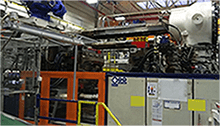
2700 tons Husky
| | | |