|
|
|
|
 |
 Blow moulding of thermoplastics |
|
 |
|
| |
|
|
|
Fault |
Fault |
Probable Cause |
Probable Cause |
Suggested Remedy |
Suggested Remedy |
| 1. |
Rough, grain,
surface |
| 1.1 |
Local air pockets. |
1.1 |
Provide adequate venting. |
| 1.1.1 |
Have mould cavities
with roughened surface (sand blasting), particularly for polyethylenes. |
| 1.2 |
Thermal degradation. |
1.2 |
Reduce the melt temp. |
| 1.3 |
Mould Temp. very high. |
1.3 |
Reduce the mould temp. |
| 1.4 |
Inadequate blowing pressure
or slow rate of blow. |
1.4 |
Correct. |
| |
|
Fault |
Fault |
Probable Cause |
Probable Cause |
Suggested Remedy |
Suggested Remedy |
| 2. |
Melt fracture or chatter marks
in parison. |
| 2.1 |
Material
temp. too low. |
2.1 |
Increase
the melt temp. |
| 2.2 |
Extrusion
rate too high. |
2.2 |
Decrease
the extrusion rate. |
| |
|
Fault |
Fault |
Probable Cause |
Probable Cause |
Suggested Remedy |
Suggested Remedy |
| 3. |
Distortion warping
|
| 3.1 |
Shrinkage
differences in axially symmertrical parts, shrinkage differences
due to wall thickness. |
3.1 |
Compensate
by a mould shrinkage allowance that increase with thickness.
|
| 3.2 |
Shrinkage differences
in oval parts, warping. |
3.2 |
Give the article a spherical
design. |
| |
|
Fault |
Fault |
Probable Cause |
Probable Cause |
Suggested Remedy |
Suggested Remedy |
| 4. |
Formation of an
edge along the parting line. |
| 4. |
Non-alignment
of mould halves. |
4. |
Adjust the
mould halves carefully. |
| |
|
Fault |
Fault |
Probable Cause |
Probable Cause |
Suggested Remedy |
Suggested Remedy |
| 5. |
Non-uniform wall-thickness,
particularly thinning of side wall near the base. |
| 5.1 |
Parison
necking away from the die due to low hot strength of the polymer. |
5.1 |
Use material
of better hot strength (usually of lower melt-flow index). |
| 5.2 |
Too high
a melt temp. |
5.2 |
Reduce the
melt temp. |
| 5.3 |
The bottle design requiring
too great a length for the wall-thickness employed. |
5.3 |
Employ mechanical means
to maintain uniformity of parison wall. |
| |
|
Fault |
Fault |
Probable Cause |
Probable Cause |
Suggested Remedy |
Suggested Remedy |
| 6. |
Poor weld and excessive thinning
at the weld. |
<
<
| 6. |
Badly designed
pinch-off. |
6. |
Redesign
the pinch-off to prevent material being robbed from the weld
and to ensure a good weld yet at the same time provide for easy
removal of flash. |
| |
|
Fault |
Fault |
Probable Cause |
Probable Cause |
Suggested Remedy |
Suggested Remedy |
| 7. |
Parison welding or parison
sticking to the knife which cuts the parison. |
| 7.1 |
Blunt knife.
|
7.1 |
Sharpen
the knife-edge. |
| 7.2 |
Knife situated
too far from the die. |
7.2 |
Bring the
knife closer to the die. |
| 7.3 |
Knife travels
too slow. |
7.31 |
Increase the travel
speed of knife. |
| 7.32 |
Reduce the temp. |
| |
|
Fault |
Fault |
Probable Cause |
Probable Cause |
Suggested Remedy |
Suggested Remedy |
| 8. |
Unpleasant odour. |
| 8.1 |
Thermal degradation of the polymer. |
8.1 |
Check the temperature programmes. |
| 8.2 |
Oil contamination in air used for blowing. |
8.2 |
Use filtered air for blowing. |
| 8.3 |
Contamination from the extrusion barrel. |
8.31 |
Clean the extrusion equipment periodically. |
| 8.32 |
Avoid use of reprocessed material. |
| |
|
Fault |
Fault |
Probable Cause |
Probable Cause |
Suggested Remedy |
Suggested Remedy |
| 9. |
Rough parison. |
| 9.1 |
Melt temperature too low. |
9.1 |
Increase heat progressively. |
| 9.2 |
Melt fracture or instability. |
9.2 |
Use higher flow resin if possible. |
| |
|
Fault |
Fault |
Probable Cause |
Probable Cause |
Suggested Remedy |
Suggested Remedy |
| 10. |
Poor glass. |
| 10. |
Low flow
resin. |
10. |
Use higher
melt index resin. |
| |
|
Fault |
Fault |
Probable Cause |
Probable Cause |
Suggested Remedy |
Suggested Remedy |
| 11. |
Rippling in sector or part
of parison. |
| 11. |
Die shaping
incorrect. |
11.1.1 |
Decrease
shaping depth.
|
| 11.2 |
Parison
extrusion rate too high. |
11.1.2
|
Decrease
shaping land. |
| 11.1.3 |
Increase
shaping width. |
| 11.2 |
Reduce pressure
or accumulation. |
| |
|
Fault |
Fault |
Probable Cause |
Probable Cause |
Suggested Remedy |
Suggested Remedy |
| 12. |
Warpage. |
| 12.1 |
Insufficient
cooling. |
12.1.1 |
Reduce mould
temp. |
| 12.2 |
Non-uniform
cooling. |
12.1.2
|
Provide
better water circulation. |
| 12.1.3 |
Increase
cooling time. |
| 12.1.4 |
Use internal
cooling. |
| 12.2 |
Provide more
cooling. |
| |
|
Fault |
Fault |
Probable Cause |
Probable Cause |
Suggested Remedy |
Suggested Remedy |
| 13. |
Thinning at parting line. |
| 13.1 |
Low blowing
pressure. |
13.1.1 |
Increase
blow pressure. |
| 13.1.2
|
Eliminate
restriction in air line. |
| 13.2 |
Pinch-off
too sharp. |
13.2 |
Widen pinch
land |
| 13.3 |
Air-entrapment. |
13.3 |
Improve
mould venting. |
| |
|
Fault |
Fault |
Probable Cause |
Probable Cause |
Suggested Remedy |
Suggested Remedy |
| 14. |
Part blow out. |
| 14.1 |
Too large
a blow-up ratio. |
14.1 |
Use large
die. |
| 14.2 |
Mould separation. |
14.2 |
Increase
clamp pressure or decrease blowing pressure. |
| 14.3 |
Pinch-off
too hot, no weld. |
14.3 |
Cool mould
pinch-off. |
| 14.4 |
Pinch-off
too sharp. |
14.4 |
Provide wider
land in pinch-off. |
| 14.5 |
Part blows
too fast. |
14.5 |
Use low-pressure
blow followed by high pressure blow. |
| |
|
Fault |
Fault |
Probable Cause |
Probable Cause |
Suggested Remedy |
Suggested Remedy |
| 15. |
Parison 'doughnut' formation. |
| 15.1 |
Mandrel
not upto temp. |
15.1 |
Allow mandrel
to reach equilibrium with rest of system. |
| 15.2 |
Mandrel
too high. |
15.2 |
Lower mandrel
tip slightly below bushing. |
| 15.3 |
Die face
dirty. |
15.3 |
Clean die. |
| |
|
Fault |
Fault |
Probable Cause |
Probable Cause |
Suggested Remedy |
Suggested Remedy |
| 16. |
Black specks in parts. |
| 16.1 |
Degraded
material in system. |
16.1.1 |
Throughly purge barrel
and accumulator. |
| 16.1.2
|
Avoid long
shutdowns with material at high temperature. |
| 16.2 |
Hold up areas
in head. |
16.2 |
Improve streamline
on head. |
|
Previous Article
Next Article
Tell Us What You Want
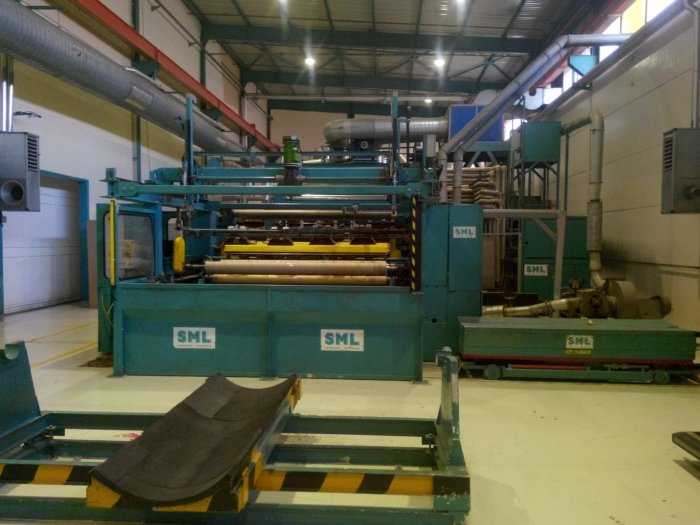
SML Lenzing Cast Film Line
| | | | | | | | | | | | | | | | | | | | | | |